
Few places in Europe can match the sheer photogenic quality of Lake Bled. Tucked into the northwestern corner of Slovenia, this glacial lake combines every element a landscape photographer could wish for: a medieval island church, a cliff-top castle, the rugged peaks of the Julian Alps, and atmospheric morning mists that transform the scene into something almost otherworldly. Whether you shoot with a smartphone or a full-frame mirrorless body, Bled rewards patience, planning, and a willingness to set the alarm painfully early.
This guide breaks down exactly when, where, and how to photograph Lake Bled so you can return home with images that do this remarkable place justice.
Why Lake Bled Is a Must-Photograph Destination
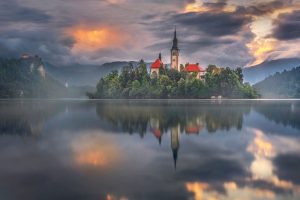
Lake Bled sits at an elevation of around 475 metres, cradled by forested hills and backed by the Karavanke mountain range. At its centre floats Bled Island, home to the 17th-century Church of the Assumption, whose white bell tower has become the single most recognisable symbol of Slovenian tourism. On the northern shore, Bled Castle perches on a 130-metre cliff, adding a dramatic counterpoint to the lake’s serene surface.
What makes the location truly special for photographers, though, is the interplay of natural light and microclimate. The surrounding hills channel cool air over the warm lake surface, producing low-lying mist most mornings in spring and autumn. Combined with golden-hour side-lighting and the possibility of alpenglow on distant peaks, the conditions offer an unusual density of photographic opportunities within a small, walkable area.
Best Time of Year to Photograph Bled Lake
Autumn (Late September – Early November)
Autumn is widely regarded as the finest season for landscape photography at Lake Bled. The surrounding deciduous trees shift from deep green to vibrant shades of gold, amber, and crimson, adding colour contrast to compositions that feature the turquoise water. Morning fog is frequent in October, creating the ethereal, fairytale atmosphere that has made Lake Bled an icon. Crowds thin noticeably after late September, so you are more likely to find popular viewpoints to yourself at dawn.
Spring (April – May)
Spring brings fresh greenery, wildflowers, and snowcapped peaks still lingering in the background. It is an excellent time to capture the contrast between the new season in the valley and the lingering winter at altitude. Daylight hours are long but not extreme, meaning sunrise starts at a manageable time compared to the very early summer dawns.
Winter (December – February)
When snow arrives, Lake Bled transforms into a winter wonderland. A dusting of white on the island church and surrounding hills produces some of the most striking and rare images. However, snow is not guaranteed in this part of Slovenia, and grey, overcast days without it can be uninspiring. If you are travelling specifically for winter shots, monitor weather forecasts closely and be prepared to be flexible with dates.
Summer (June – August)
Summer offers long days and warm weather, but it also brings the highest tourist numbers and the harshest midday light. If you visit in summer, commit to early morning and late evening sessions. The upside is that the traditional pletna boats are active throughout the day, providing excellent foreground subjects on the calm water.
Best Time of Day for Lake Bled Photography
Morning undeniably holds the advantage at Lake Bled. The lake sits roughly northeast of the Julian Alps, which means early light illuminates the scene beautifully from spring through autumn. Aim to arrive at least thirty minutes before sunrise: the blue hour casts a cool, tranquil glow over the water, and you may be rewarded with perfectly still reflections before wind picks up later in the day.
Morning mist is the headline act. When conditions are right, the fog settles over the lake surface and drifts slowly past the island, creating silhouettes and layers that shift minute by minute. These moments are fleeting, often lasting only twenty to forty minutes after dawn, so it pays to be in position early and ready to shoot.
Sunset can also be rewarding, particularly on evenings when clouds catch warm light above the Alps. Keep in mind, though, that the sun drops behind the mountains well before the official sunset time, casting the lake into shadow earlier than you might expect. For alpenglow on the Karavanke peaks, stay at a viewpoint with a clear northwestern sightline as light fades.
Top Photography Locations at Lake Bled
1. Mala Osojnica Viewpoint
Mala Osojnica is the definitive Lake Bled vantage point. Sitting at roughly 645 metres above sea level, it offers a sweeping panorama that includes the island, the castle, and the full arc of the Julian Alps. The hike from the lakeshore takes around 30 to 45 minutes and involves some steep, occasionally exposed sections, so sturdy footwear is essential. The payoff is the classic postcard composition that no other spot quite delivers. Arrive well before sunrise to claim a position at the bench; this viewpoint has grown increasingly popular and space is limited.
2. Ojstrica Viewpoint
Lower and closer to the lake than Mala Osojnica, Ojstrica is accessible via a shorter 20-minute hike from the same trailhead near Camping Bled on the eastern shore. The viewpoint faces east, making it ideal for sunrise when the morning light and mist combine to dramatic effect. Ojstrica gives a tighter, more intimate perspective of the island, with the castle visible on the opposite cliff. It shares the trailhead with Mala Osojnica, so you can combine both viewpoints in a single morning if you start early enough.
3. The Western Lakeshore and Boardwalk
At lake level, the southwestern shore near the Zaka inlet offers the closest shoreline-to-island shooting distance, approximately 500 metres. A wooden boardwalk runs along the water’s edge and provides stable footing for tripod work. This is the spot to pursue mirror-still reflections of the island and church, particularly at dawn before any breeze disturbs the surface. The foreground options here are excellent: pletna boats moored along the shore, overhanging trees, and subtle ripples that add texture to long exposures.
4. Bled Castle
Bled Castle sits on the northern cliff and provides an elevated perspective looking down onto the lake and island from a different angle than the hillside viewpoints. There is an entrance fee, and the castle opens at set hours, so it is not available for pre-dawn shoots. That said, mid-morning and afternoon visits offer warm, directional light on the lake below. The courtyard and ramparts provide several compositions, and it is worth exploring the full perimeter rather than shooting only from the most obvious terrace.
5. Straza Hill
On the southern side of the lake, Straza Hill can be reached on foot or by chairlift in summer. It offers panoramic views over the lake and surrounding area from a gentler, more accessible perspective than Mala Osojnica. The summit also works well for wider compositions that include the town of Bled and the broader valley context.
Essential Photography Tips for Lake Bled
Gear Recommendations
A wide-angle lens in the 16–24 mm range (full-frame equivalent) is the workhorse for Lake Bled, especially from elevated viewpoints where you want to capture the entire scene. A mid-range telephoto around 70–200 mm is useful for isolating details: the church bell tower, pletna boats, or patterns in the mist. Bring a sturdy tripod for dawn and dusk sessions and a set of graduated neutral density filters to balance the bright sky against the darker foreground. A circular polariser is invaluable for cutting glare on the water surface and boosting the turquoise colour of the lake.
Composition Strategies
Lake Bled practically composes itself, but the most compelling images go beyond the obvious. Look for strong foreground elements: fallen leaves in autumn, frost patterns in winter, or the curved prow of a pletna boat. Position the island using the rule of thirds rather than dead centre, and consider vertical compositions from the elevated viewpoints to include both the foreground slope and the distant mountains. Pay attention to leading lines, such as the shoreline curve or the boardwalk, that draw the viewer’s eye toward the island.
Working With Fog and Mist
Fog is Lake Bled’s signature atmospheric condition. When it rolls in, compositions change rapidly: the island appears and disappears, the castle fades to a silhouette, and layers of depth form naturally. Resist the temptation to overexpose misty scenes. Slightly underexposing by a third to half a stop preserves the mood and keeps detail in the white fog. Shoot continuously during fog events, as conditions can shift dramatically within minutes and the best frame often comes when you least expect it.
Beyond the Iconic Shot
While the island-and-castle panorama is the headline image, Lake Bled has much more to offer the observant photographer. Explore the details: the weathered wood of pletna boats, reflections of autumn leaves in still water, the textures of castle stone, or wildlife like ducks and swans gliding across the early-morning surface. Many of the most memorable images from Bled come not from the famous viewpoints, but from quiet corners that reveal themselves only to those who take the time to wander.
Nearby Locations Worth Photographing
Lake Bled sits within one of the most photogenic regions in all of Europe, and any visit should include a few excursions beyond the lake itself.
Vintgar Gorge is just four kilometres from Lake Bled and offers a completely different photographic experience. The 1.6-kilometre wooden walkway follows the Radovna River through a narrow gorge of emerald pools, rapids, and waterfalls. A neutral density filter for long exposures of the rushing water is highly recommended here.
Lake Bohinj, about thirty minutes south, is larger and wilder than Bled, with fewer tourists and a more rugged alpine character. Its reflections of the surrounding peaks on calm mornings are extraordinary.
The Church of St. Thomas near Škofja Loka sits on a hilltop where morning mist blankets the valleys below, creating the illusion that the church is floating above clouds. It is one of Slovenia’s most photogenic sunrise locations and pairs beautifully with a Lake Bled itinerary.
Jamnik, known as the Balcony of Gorenjska, offers sweeping panoramic views of the Alps with a charming hilltop church as the focal point. It is an ideal location for dramatic sunset and sunrise photography.
Getting the Most Out of Your Lake Bled Photography Trip
Planning matters. Bled is compact enough to explore independently, but having local knowledge makes a significant difference. Knowing exactly which viewpoint works best for a particular wind direction, where the mist tends to linger longest, or when a lesser-known angle catches perfect sidelight can elevate your portfolio from good to outstanding.
This is why many serious photographers choose to join slovenia photography expeditions led by professionals who know the terrain intimately. Luka Vunduk, a Slovenian-born Canon Ambassador and internationally awarded landscape photographer, runs small-group photo tours through Slovenia that include Lake Bled as a key destination. His tours are designed around optimal light conditions and hidden vantage points that most visitors never discover, with a maximum of seven participants to ensure personal guidance. For photographers who want to capture Bled at its absolute best while also exploring Slovenia’s other remarkable locations, a guided tour with deep local expertise is hard to beat.
Practical Information
Parking: The main car park at Zaka on the western shore is closest to most photography spots but fills early, especially on weekends and in peak season. Arrive before dawn to secure a space if you plan a sunrise session.
Drone photography: Slovenia follows EU drone regulations. Registration and an online competence certificate are required. Lake Bled permits drone use, and aerial perspectives of the island and shoreline are spectacular, but always check current local restrictions before flying.
Weather and clothing: Mornings at the lake can be significantly cooler than daytime temperatures, especially in autumn and spring. Layer up and bring waterproof footwear for the viewpoint hikes, which can be muddy or frosty in the early hours.
Accommodation: Staying in or near Bled town allows you to reach the lake within minutes for pre-dawn starts. Several hotels along the southern lakeshore offer easy access to both the Ojstrica trailhead and the western boardwalk.
Final Thoughts
Lake Bled is one of those rare locations that lives up to every photograph you have ever seen of it, and then surpasses your expectations when you witness it in person. The key to capturing it well lies in timing: the right season, the right hour, the right weather conditions. Come prepared, arrive early, and give yourself more than one morning at the lake. The light changes constantly, and the scene that greets you on a misty October dawn will be entirely different from the one you see on a clear spring afternoon. That variety is what keeps photographers returning to this extraordinary Slovenian gem, season after season.